Stop Splatting Paint: Master Airbrushing Physics for Flawless Finishes
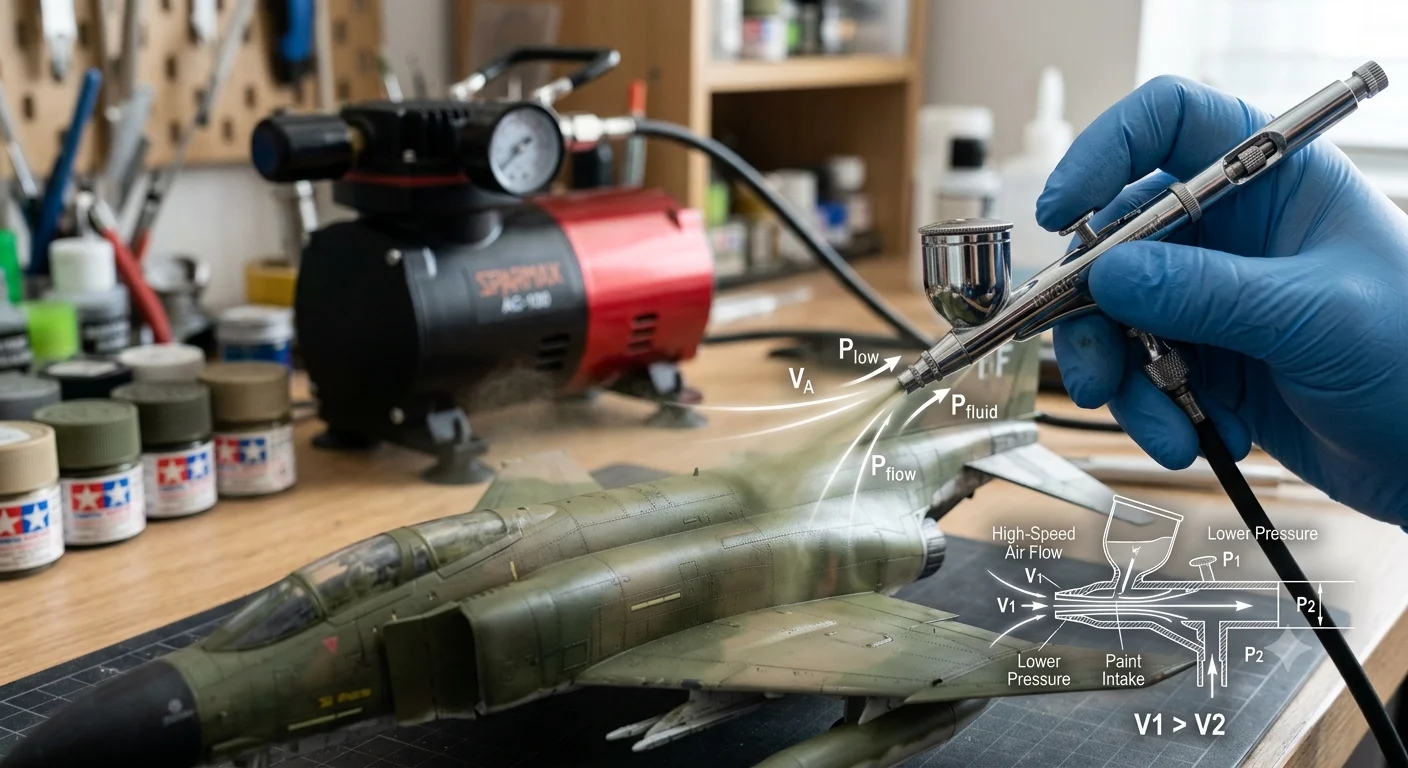
Macro extreme close-up of a premium dual-action airbrush spraying a fine paint mist onto a scale model with Bernoulli's fluid dynamics principle graphic overlays.

Ever pulled the trigger on your airbrush expecting a silky-smooth coat, only to end up with ugly paint splatters, dry spray, or pooling droplets? You diluted the paint properly, cleaned the needle, and yet your model kit looks like an orange peel. It’s not just bad luck—it’s a violation of fluid dynamics. The good news? … Read more
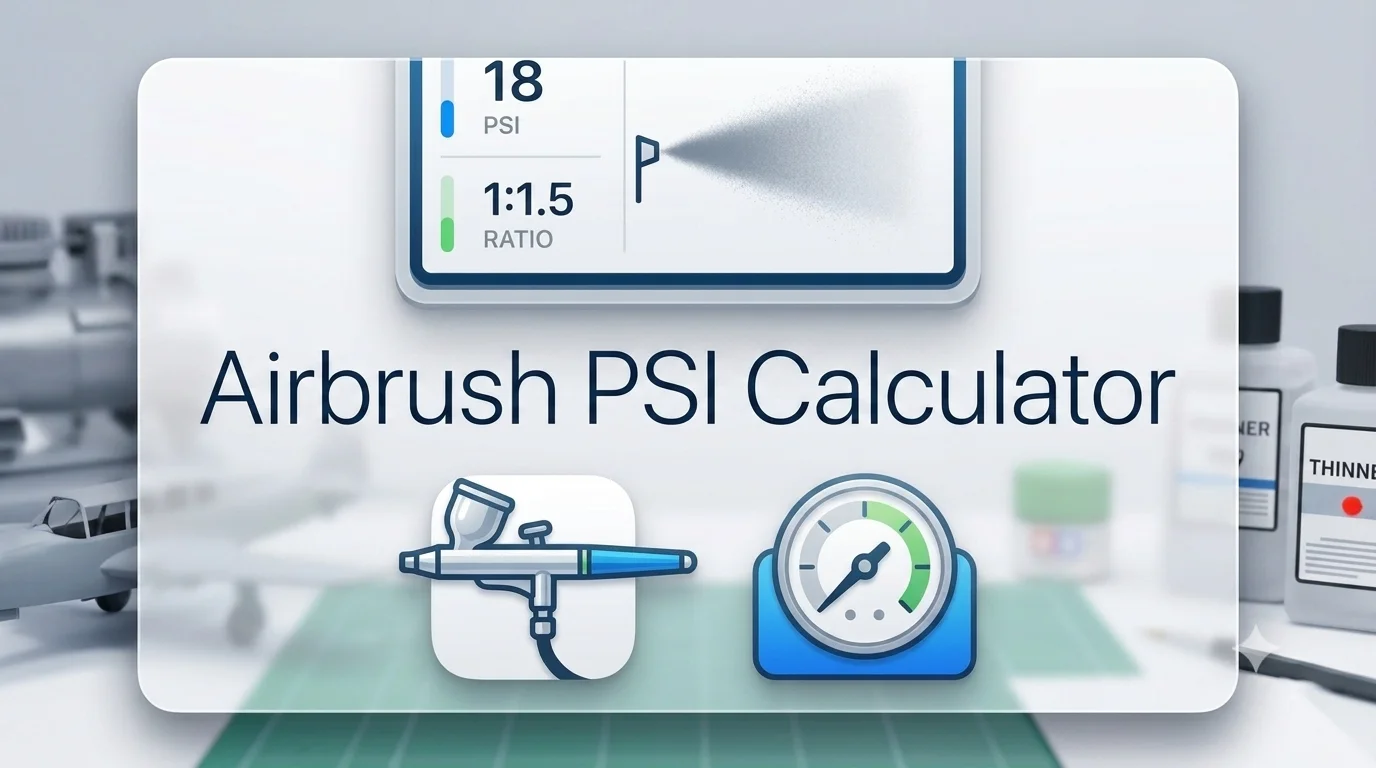
Airbrush Pressure & Dilution Calculator

A clean, modern graphic for an airbrush calculator and simulator, featuring icons for an airbrush, a pressure gauge, and a digital interface with a spray visualization.

Airbrush Optimizer PSI Pressure & Dilution Ratio Simulator Paint Type Acrylic PaintEnamel PaintLacquer PaintUrethane Paint Nozzle Size 0.2 mm (Fine)0.3 mm (Standard)0.5 mm (Large) Spray Technique Fine Detail / High PrecisionStandard Coverage / Base CoatWide Surface / Primer & Clear Coat Recommended Pressure 18 PSI (1.24 Bar) Mixing Ratio (Paint : Thinner) 1 : 1.5 … Read more

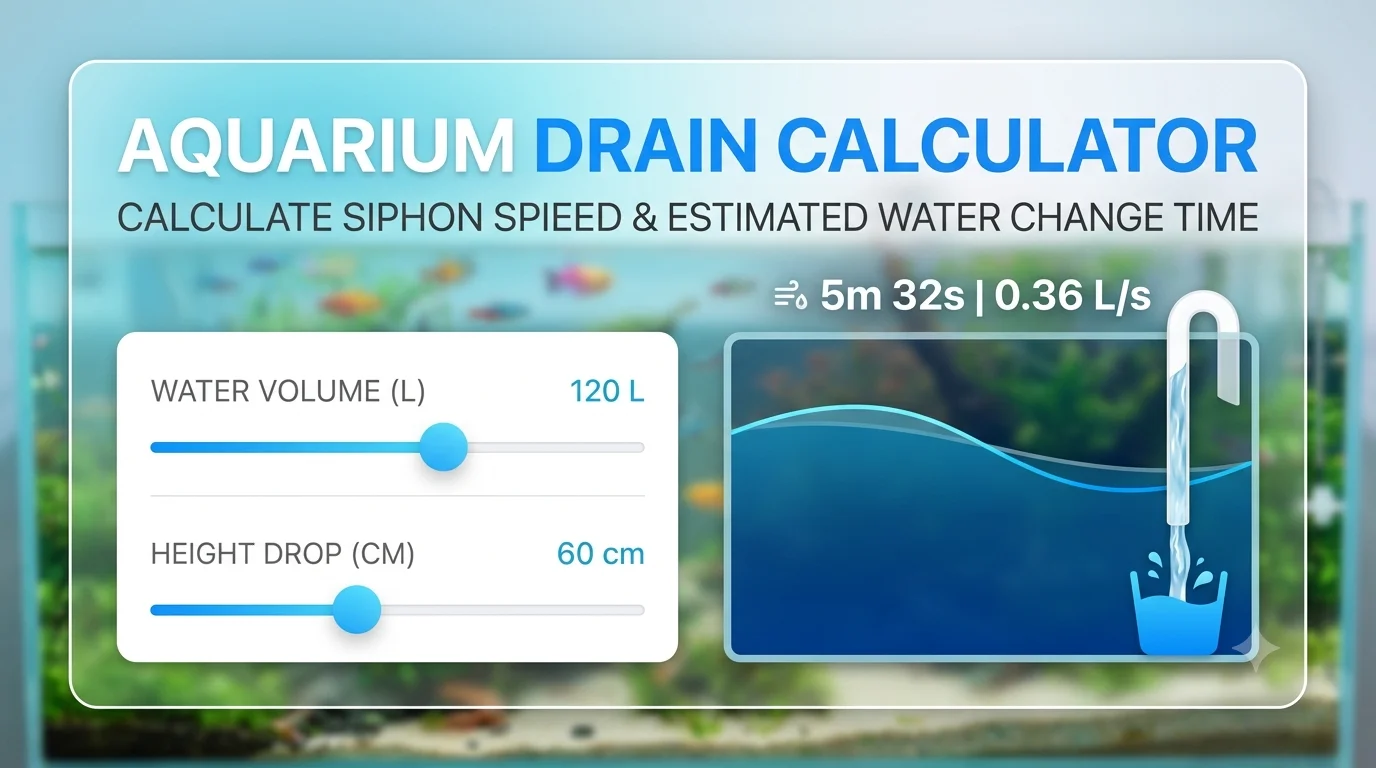
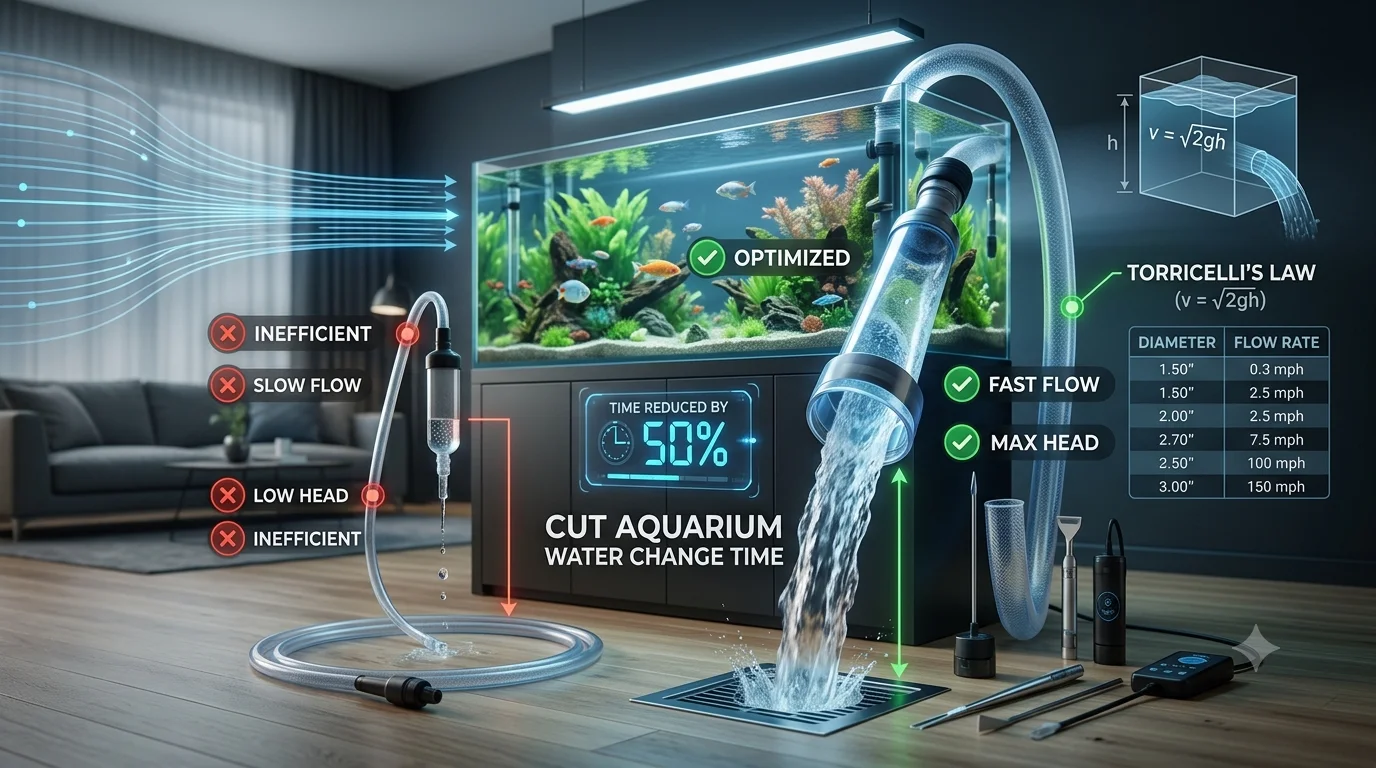
Stop Wasting Hours on Water Changes: The Physics of Ultra-Fast Siphon Drainage

Infographic comparing optimized versus inefficient aquarium water change setups, illustrating Torricelli's Law ($v=\sqrt{2gh}$) and a 50% reduction in drainage time using wide-diameter hoses and maximum vertical drop.

If you own a large aquarium, water change day probably feels like a slow, painful endurance test. You setup your siphon, start the flow, and then sit there watching the water trickle out at a agonizingly slow pace—especially during the last few inches. Why does a siphon start with a roaring flow and finish with … Read more

Why Your “Induction-Ready” Pans Are Scorch-Heating Your Food (And How to Fix It)

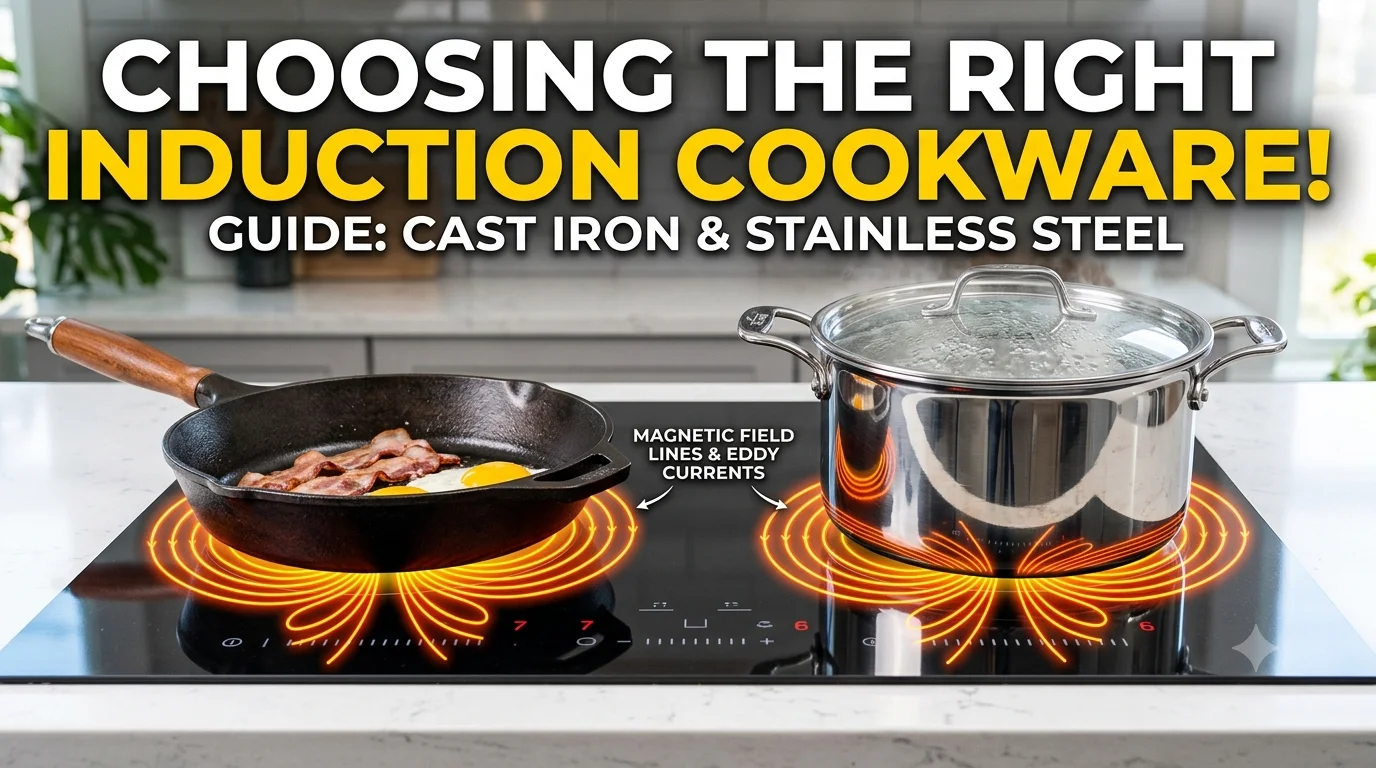
Modern induction cooktop with enameled cast iron skillet and multi-ply stainless steel pan illustrating glowing electromagnetic magnetic flux lines and eddy currents at the base.

Is your high-end induction cooktop humming loudly, heating unevenly, or taking forever to boil water despite using expensive cookware? You are not alone. Most home chefs assume any pan with a “magnet-stick” bottom guarantees maximum efficiency. In reality, poor electromagnetic coupling wastes energy, strains your cooktop’s internal coils, and turns your cooking process into a … Read more

Induction cookware compatibility: Lenz’s Law

A clean, modern interface card with a visual simulation of an induction coil and pot. Text reads "Induction Cookware Efficiency & Compatibility Checker" with a 85% high efficiency gauge.

Induction Cookware Compatibility Simulate electromagnetic heat transfer based on Faraday & Lenz’s Laws 1. Cookware Base Material Cast Iron High Permeability Stainless 430 Ferritic Steel Stainless 304 Austenitic Steel Aluminum High Conductivity Copper Low Resistance 2. Bottom Magnet Test Result Strong Attraction Sticks Firmly Weak Attraction Slips Lightly No Attraction Does Not Stick Induction Thermal … Read more

Stop Guessing Mesh Node Placement: The Gauss’s Law Guide to Zero Wi-Fi Dead Zones

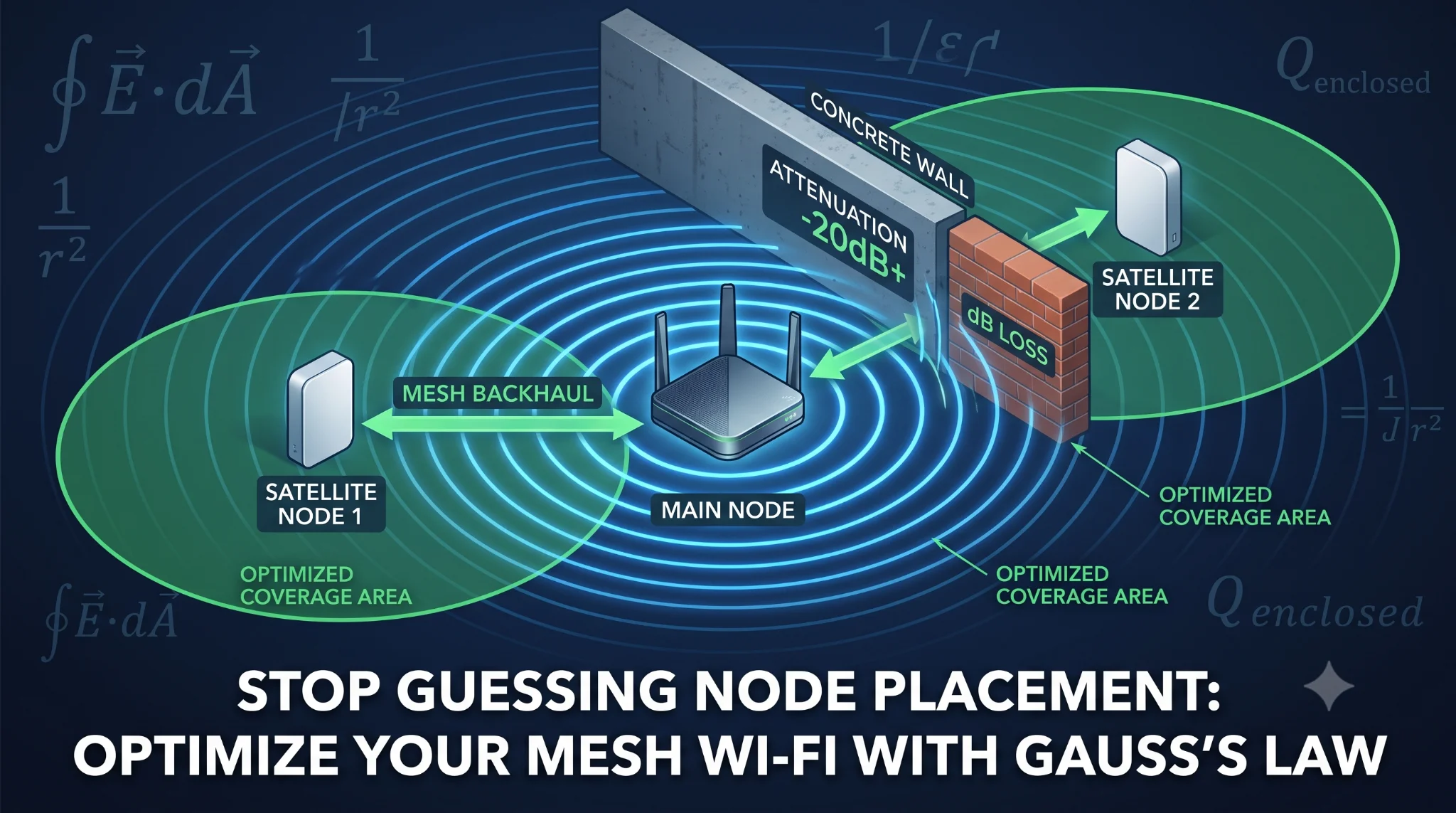
An infographic visualizing how Gauss's Law and material attenuation affect Wi-Fi signals in a home, showing how to place mesh nodes to eliminate dead zones.

Is your gigabit internet crawling at 5 Mbps the moment you step into the master bedroom or home office? You bought an expensive multi-pack mesh system, dropped nodes in every room, yet Zoom calls drop and 4K streams keep buffering. The frustrating truth? Adding more nodes often makes your Wi-Fi worse. You don’t need more … Read more

Wi-Fi Signal Coverage Simulator

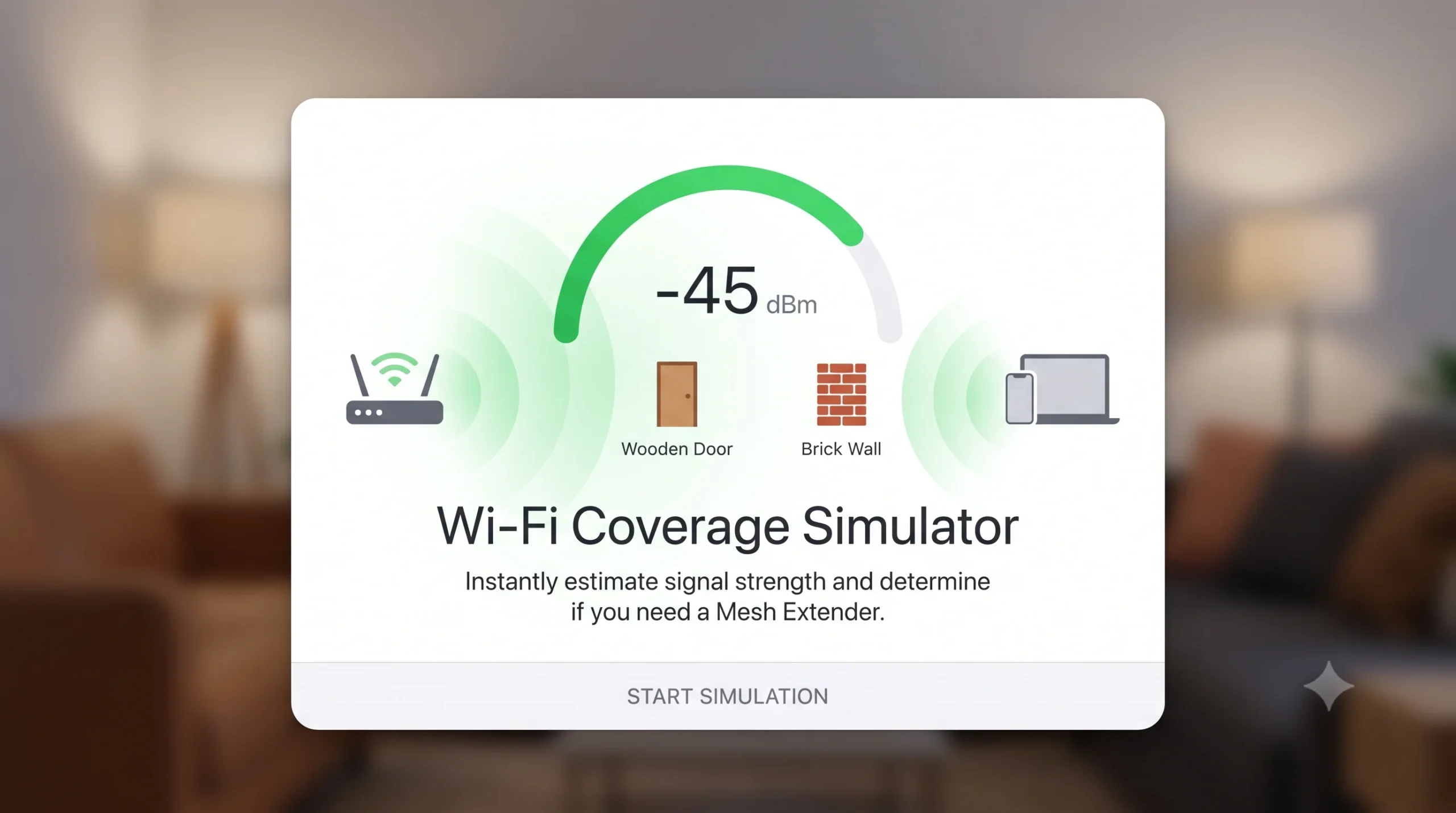
A clean, Apple-style interactive card thumbnail for the "Wi-Fi Coverage Simulator" tool, showing a router, signal strength indicator, physical obstacles like a wooden door and brick wall, and a visual diagnostic graph.

Wi-Fi Signal Coverage Simulator Estimate signal loss and determine mesh expansion needs Frequency Band 2.4 GHz (Better Range) 5.0 GHz (Faster Speed) Distance to Room 5 m Wall Material Wooden Door / Glass Panel (-3 dB)Standard Brick / Drywall (-6 dB)Reinforced Concrete (-12 dB) Number of Walls 2 -55 dBm Strong Signal Loading simulation… Key … Read more

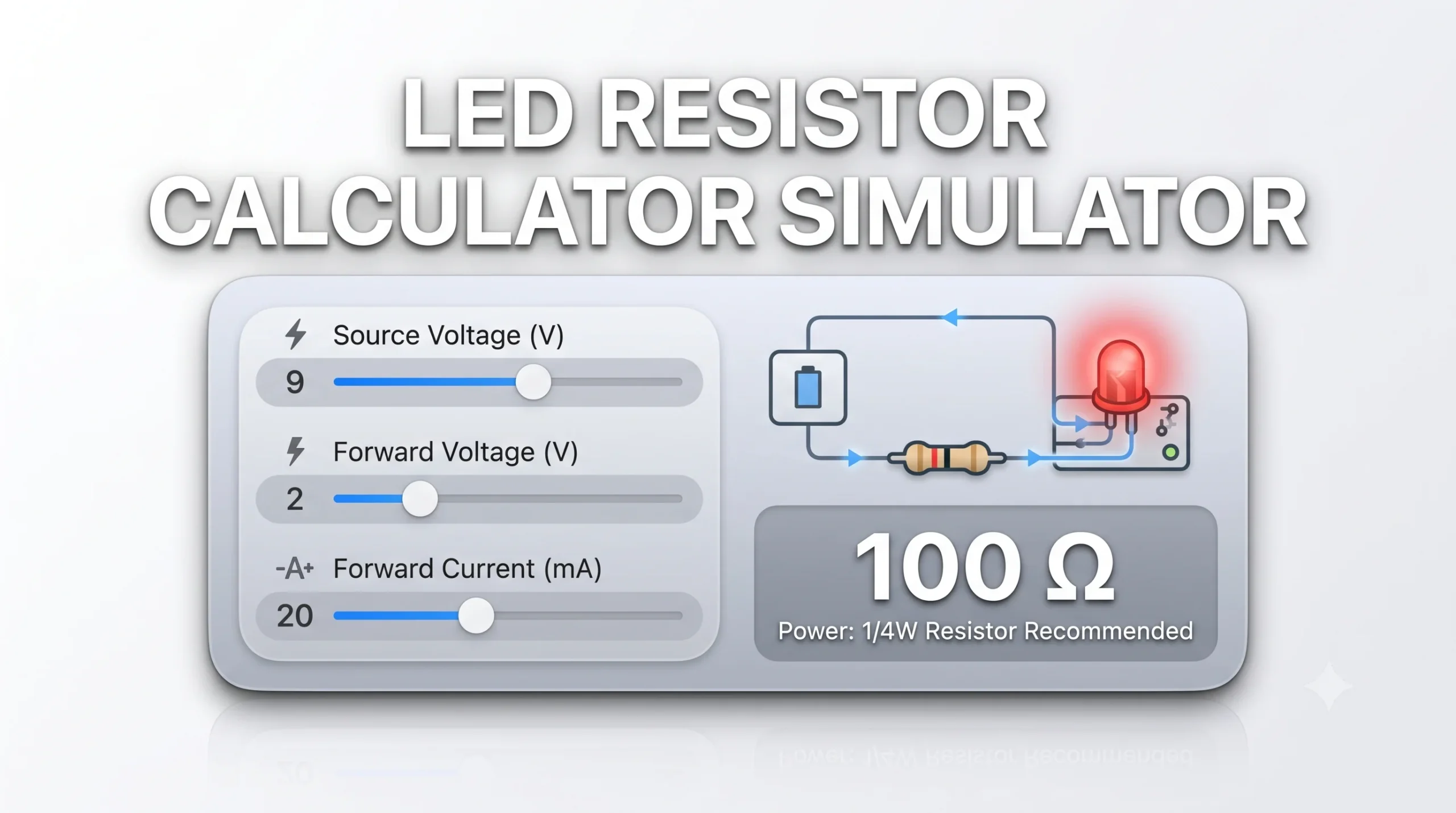
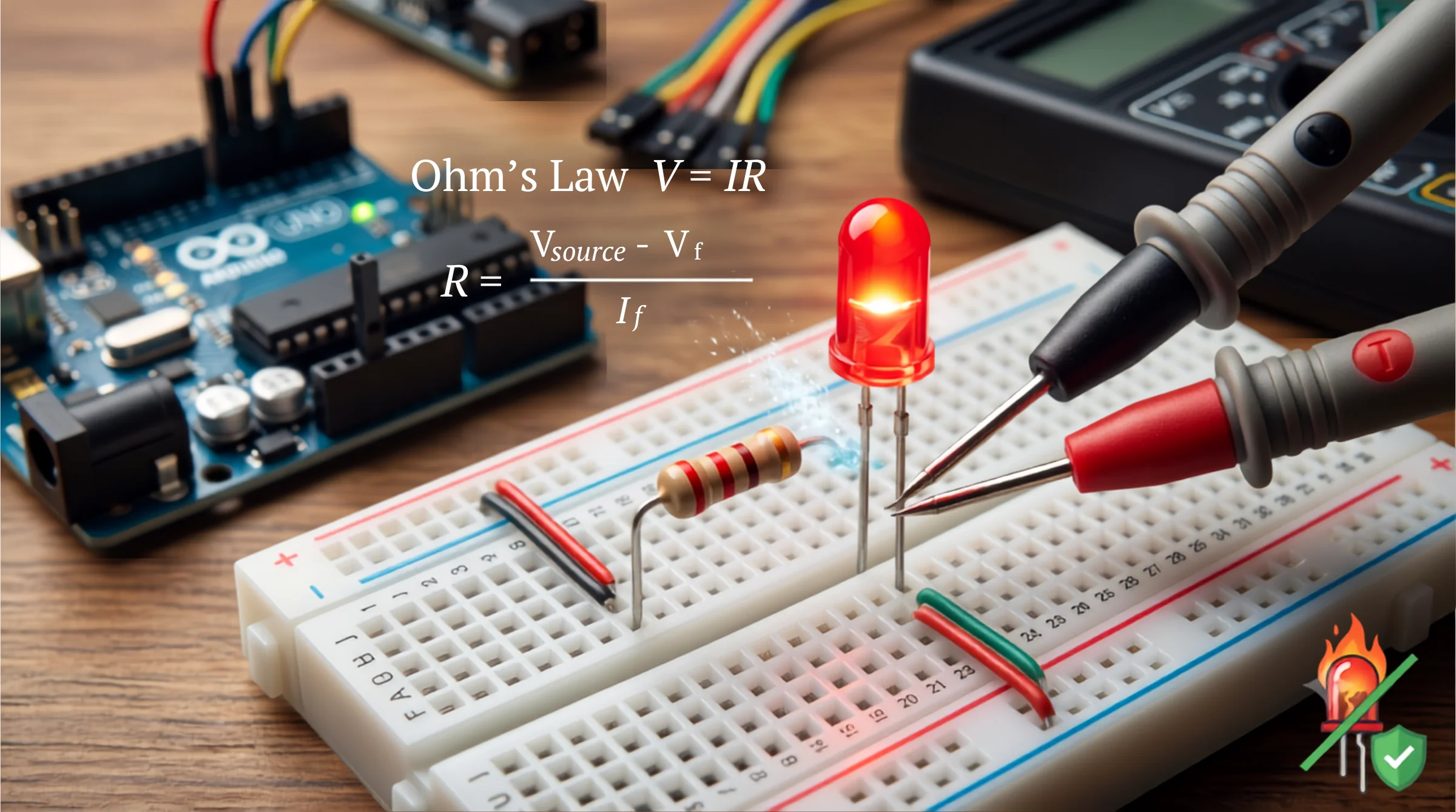
LED Resistor Calculator

An infographic thumbnail illustrating an interactive LED resistor calculator. It features a modern interface with sliders for Source Voltage, Forward Voltage, and Forward Current, a glowing red LED circuit diagram, and a large display showing a result of 100 Ohms and a 1/4W resistor recommendation. The title 'LED RESISTOR CALCULATOR SIMULATOR' is prominently displayed.

LED Resistor Calculator Adjust sliders to calculate resistor & power rating Source Voltage (VS) 9.0 V LED Forward Voltage (VF) 2.0 V LED Forward Current (IF) 20 mA Source Resistor LED Required Resistance 350 Ω Power: 0.14 W (Nearest Standard: 390 Ω, 1/4W) Safe Circuit Configuration Key Features How to Use